












Reusable isothermal packaging for pharma: how EMBALL’ISO is making reuse a cold chain standard
EMBALL’ISO is a privately owned French company, founded in 1990 near Lyon, specialising in the design, validation and manufacture of high-performance insulated packaging for the pharmaceutical industry. Its distinctive offering is Reuse & Reverse Logistics: collecting, reconditioning and reusing insulated packaging as part of a circular-economy approach.

Reuse & Reverse Logistics and reusable pharmaceutical packaging: the EMBALL’ISO model explained by Shuji Hotta
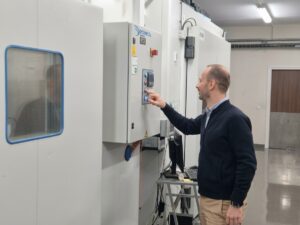
Reliable cold chain packaging (also called insulated or isothermal packaging) is packaging whose thermal performance has been demonstrated through testing under real shipping conditions, not just calculated on paper. It protects the product for the full duration of transport, is easy and safe to handle, and limits environmental impact.
Pharmaceutical cold chain packaging: how to design and validate a reliable insulated shipper
Reliable cold chain packaging (also called insulated or isothermal packaging) is packaging whose thermal performance has been demonstrated through testing under real shipping conditions, not just calculated on paper. It protects the product for the full duration of transport, is easy and safe to handle, and limits environmental impact.

Reusable isothermal packaging: a comparison guide
The right reusable isothermal packaging depends on three criteria: the temperature to hold, the volume to ship and the transit time. EMBALL’ISO offers more than ten reusable solutions, from a 1.2 L isothermal bag to a 3,410 L Pallet Shipper, covering +25 °C down to below −70 °C (dry ice), withhold times from 24 to 240 hours.
32,753 tonnes of co₂ avoided : what does that mean in practice?
32,753 tonnes of CO₂ avoided is the equivalent of about 15,900 round-trip flights between Paris and New York, 230 million km in a combustion-engine car, or 11.2 billion km by TGV. This figure, as of November 2, 2026, is the total achieved by EMBALL’ISO’s Reuse & Reverse service since 2015. In a car, 230 million km is roughly 5,700 trips around the Earth.

Three months of treatment for a young patient in Mayotte: 73 hours in transit, cold chain maintained with VYPE
In May 2026, a shipment containing three months’ worth of treatment for a young girl with a rare disease, the only patient affected by this condition on the island of Mayotte, was transported from mainland France in an EMBALL’ISO VYPE insulated shipper. The shipment was worth several hundred thousand euros. Throughout 73 hours in transit (3 days), the internal temperature remained stable at around 5°C, well within the required 2–8°C range. The treatment was delivered with the cold chain intact.

Cyclone Garance: 14 Days in Transit to Réunion, with the 2–8°C Cold Chain Maintained Using ISOGO Insulated Packaging
In February 2025, Cyclone Garance led to the cancellation of several flights between mainland France and Réunion Island. A pallet of temperature-sensitive products, packed in EMBALL’ISO ISOGO 8L insulated packaging, was held in a cold room at the departure airport for more than 8 days. The total transit time reached 336 hours (14 days). Temperature data loggers showed that the internal temperature remained within the 2–8°C range throughout the entire journey, even as the external temperature reached up to 29°C. The shipment was successfully delivered.
Beyond the Pallet Shipper: how integrated services and lab expertise secure the pharmaceutical cold chain
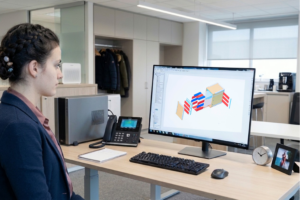
In the pharmaceutical industry, securing temperature-sensitive products involves much more than selecting a passive insulated container. While the container itself is essential, the true value lies in a comprehensive ecosystem of technical services, regulatory compliance expertise, and advanced engineering. For over 35 years, EMBALL’ISO has supported pharmaceutical laboratories and healthcare logistics providers by operating a global reusable thermal protection system tailored for complex supply chains.

Passive insulated packaging or active solution: which one to choose for the pharmaceutical cold chain?
In brief: reusable passive insulated packaging keeps a pharmaceutical product at temperature without electricity, thanks to phase change materials (PCM) and high-performance insulation. It is more reliable, cheaper and lower in CO₂ emissions than an active container, provided it is lightweight, reused many times and can be repositioned.