











Maintaining a strict cold chain is a vital requirement for several industries, including food services and biotechnology. However, it is most critical in the pharmaceutical sector, where life-saving treatments like vaccines and insulin must remain within precise temperature ranges to stay effective.
But with so many options available, from standard EPS boxes to high-tech VIP panels, how do you choose the right equipment? Here is a guide to understanding the different types of insulated shipping containers and their specific applications.
Insulated shipping containers are classified by their insulation material: EPS (economical), XPS (moisture-resistant), Polyurethane (high performance), and VIP (top-tier insulation). For pharmaceutical transport, the choice depends on the duration (up to 120h) and external temperature risks. High-value goods like insulin require technical solutions using Phase Change Materials (PCM) to prevent irreversible thermal damage.
1. Why use polystyrene insulated containers?
Polystyrene containers (both Expanded and Extruded) are the industry standard for transporting medicines that require positive or negative temperatures.
- Vaccines & Insulin: The COVID-19 pandemic highlighted the global need for strict cold chain compliance. Products like insulin or biological samples are highly sensitive; even a minor fluctuation can lead to a total loss of shipment.
- Adaptability: Manufacturers like EMBALL’ISO have developed solutions that adapt to specific logistical constraints, such as shipping through extreme climates (desert heat or arctic cold).
2. Comparing insulation materials: EPS, XPS, PU, and VIP
Not all insulated boxes are created equal. The material choice impacts the thickness, weight, and thermal resistance of the container.
Thermal performance comparison table:
| Material | Full name | Key advantage | Best Use Case |
|---|---|---|---|
| EPS | Expanded Polystyrene | Lightweight & Economical | Short durations, food, or standard pharma |
| XPS | Extruded Polystyrene | Water-resistant & Sturdier | Humid environments, better insulation than EPS |
| PU | Polyurethane | Higher performance/Thin walls | Long-duration shipments, space-saving |
| VIP | Vacuum Insulation Panel | Highest thermal resistance | Ultra-long duration (120h+), high-value drugs |
- EPS (Expanded Polystyrene): Made of air-trapped beads, it is 100% recyclable and cost-effective.
- XPS (Extruded Polystyrene): Offers superior thermal protection compared to EPS and is waterproof.
- Polyurethane (PU): A foam containing insulating gas. It allows for thinner panels while maintaining high performance.
- VIP: The “Gold Standard.” These panels offer the best insulation-to-thickness ratio on the market.
3. Selecting the right range for your logistics
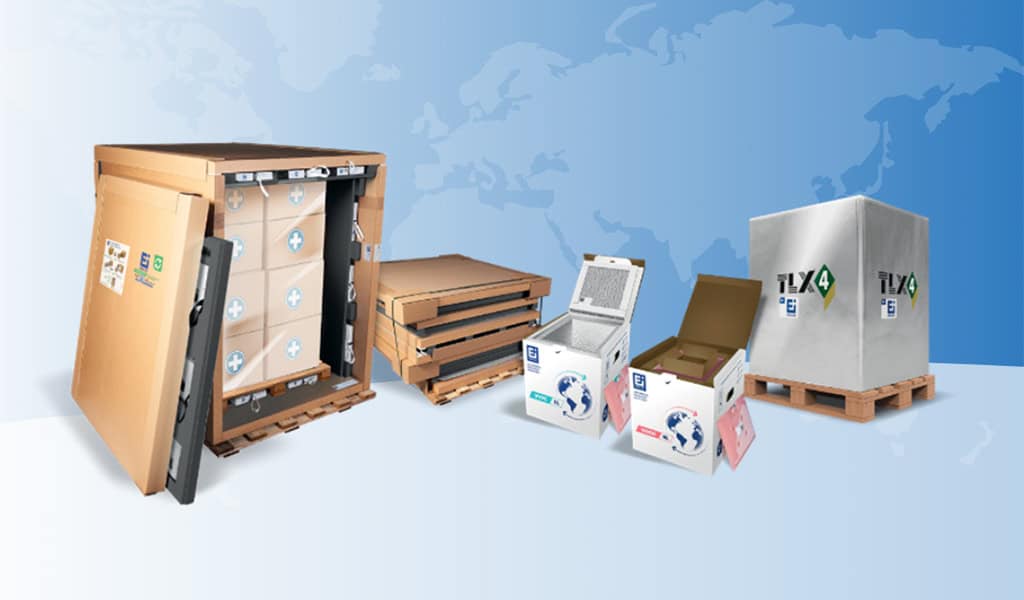
At EMBALL’ISO, we categorize our solutions based on the intensity of the transport challenge:
- Standard Range: Ideal for short-duration trips. These use EPS/XPS boxes combined with gelled water packs.
- Premium Range: Designed for most pharmaceutical needs. It protects against temperature spikes during loading/unloading and utilizes Phase Change Materials (PCM).
- Premium+ Range: The ultimate choice for long-distance, multi-day international shipping. These systems combine VIP or Polyurethane with PCM to maintain stability for more than 120 hours.
4. The high stakes of pharmaceutical logistics
In the pharma world, the density of the product is low, but the value is immense.
Because medicines are less dense than food products (like fruit), they are much more vulnerable to ambient temperature fluctuations. Furthermore, thermal damage is often invisible. A pallet may look perfect upon arrival, but if the internal temperature exceeded its limits, the medicine is legally considered “waste.” There is no room for interpretation; the cold chain must be absolute.
5. Partner with a cold chain expert
Since the quality of the container is the only thing standing between a successful delivery and a total loss, choosing a specialized manufacturer is essential. EMBALL’ISO designs and tests every solution to meet the rigorous demands of the medical and chemical industries.
Need help defining your thermal packaging strategy?